

Sustainability is no longer a trend in the food packaging industry; it is a structural shift. At the center of this transformation is RPET, or recycled polyethylene terephthalate, a material that is redefining what responsible packaging looks like for food manufacturers, retailers, and consumers alike.
What Makes RPET Different
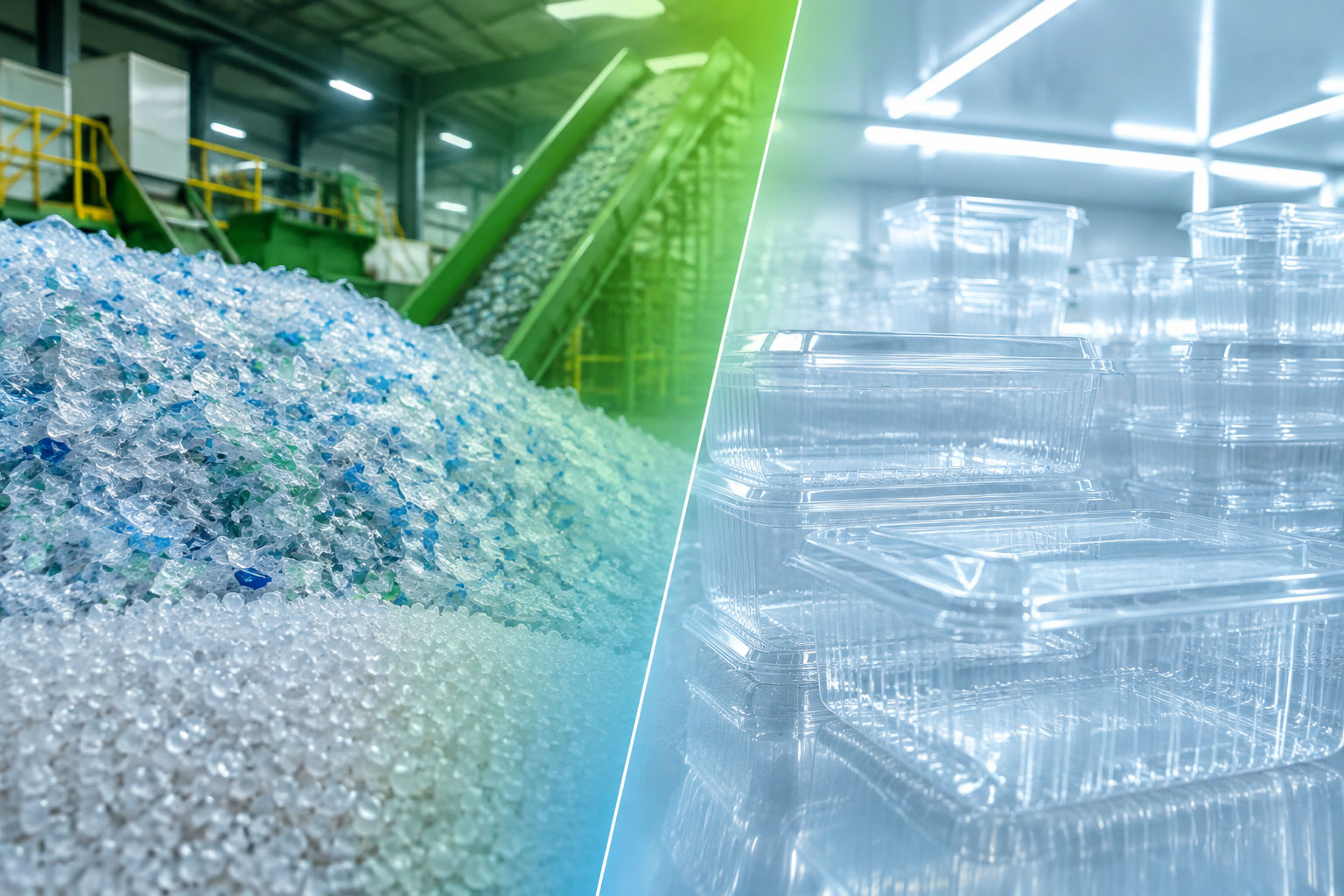
RPET is produced from post-consumer PET bottles and containers that have been collected, sorted, cleaned, and reprocessed into new food-grade packaging material. Unlike downcycled plastics that degrade in quality with each cycle, high-quality RPET can be processed into packaging that is virtually indistinguishable from virgin PET in terms of clarity, strength, and food safety performance.
The key distinction lies in the decontamination process. Food-grade RPET undergoes specialized purification steps, including hot-wash systems, super-clean technology, or chemical recycling methods that remove contaminants to levels well below regulatory thresholds. This ensures that RPET packaging meets the same stringent food-contact standards as virgin material, including FDA letter of no objection (LNO) requirements and EU EFSA authorization.
HGF Factory and RPET: HGF Factory has invested in RPET-compatible thermoforming lines and material sourcing partnerships to offer clients a seamless transition from virgin PET to recycled content. Whether you need 30%, 50%, or 100% recycled content, we can tailor production runs to match your sustainability goals without compromising on product performance.
Market Momentum: The Numbers Behind the Shift
The global RPET market has experienced rapid growth over the past five years, driven by a combination of regulatory mandates, corporate pledges, and consumer demand. Major retailers in Europe and North America have publicly committed to using 30% to 50% recycled content in their private-label packaging by 2025 and beyond. The European Union’s Single-Use Plastics Directive now mandates minimum recycled content thresholds for PET beverage containers, creating a compliance-driven demand surge that ripples across the broader food packaging sector.
Certification and Traceability
For B2B buyers, the credibility of recycled content claims is paramount. Several established certification schemes now provide verified chain-of-custody tracking from collected waste to finished packaging. The most widely recognized include:
- Recycled Claim Standard (RCS) administered by Textile Exchange, providing a framework for verifying recycled content claims throughout the supply chain.
- Global Recycled Standard (GRS), which adds environmental and social criteria to content verification.
- EuCertPlast, a European certification specific to plastics recyclers and compounders, verifying input quality and traceability.
- ISCC PLUS (International Sustainability & Carbon Certification), widely used for mass-balance accounting in chemically recycled content.
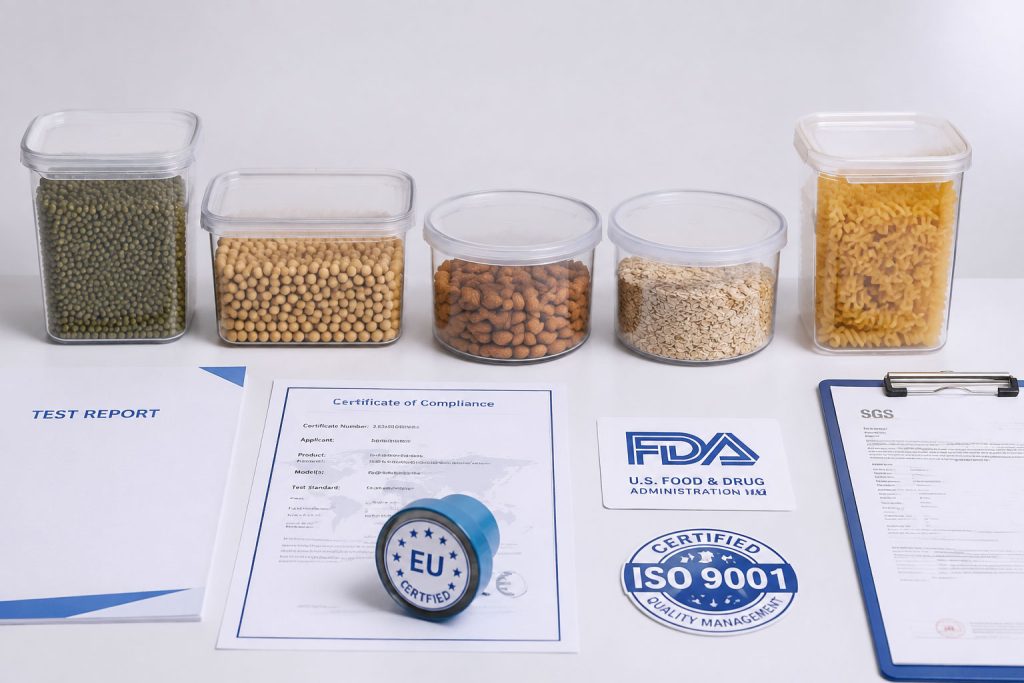
At HGF Factory, we work exclusively with RPET suppliers who hold recognized certifications. We provide full documentation, including material test reports and certificates of compliance, so that our clients can substantiate their sustainability claims with verifiable evidence.
Performance Without Compromise
A common concern among packaging buyers is whether RPET delivers the same performance as virgin PET. The answer is yes, provided the material is sourced from reputable suppliers and processed correctly. Modern RPET resins achieve optical clarity levels above 90% light transmittance, excellent thermoforming behavior, and food-contact safety profiles that pass rigorous migration testing. For the end consumer, there is no visible or functional difference between an RPET container and one made from virgin material.
This is precisely why leading supermarket chains, organic food brands, and meal-kit companies are rapidly transitioning their packaging portfolios to RPET. The material supports their brand storytelling around sustainability while maintaining the shelf performance and food protection that their operations demand.
Looking Ahead
The trajectory is clear: recycled content will become the baseline expectation, not a premium differentiator. Companies that build RPET capability into their supply chains now will be better positioned for upcoming regulatory requirements and consumer expectations. HGF Factory is committed to being at the forefront of this transition, helping our partners navigate the shift with material expertise, certified supply chains, and manufacturing precision.